The Ford RS200: The Group B Monster That Became a Rally Legend
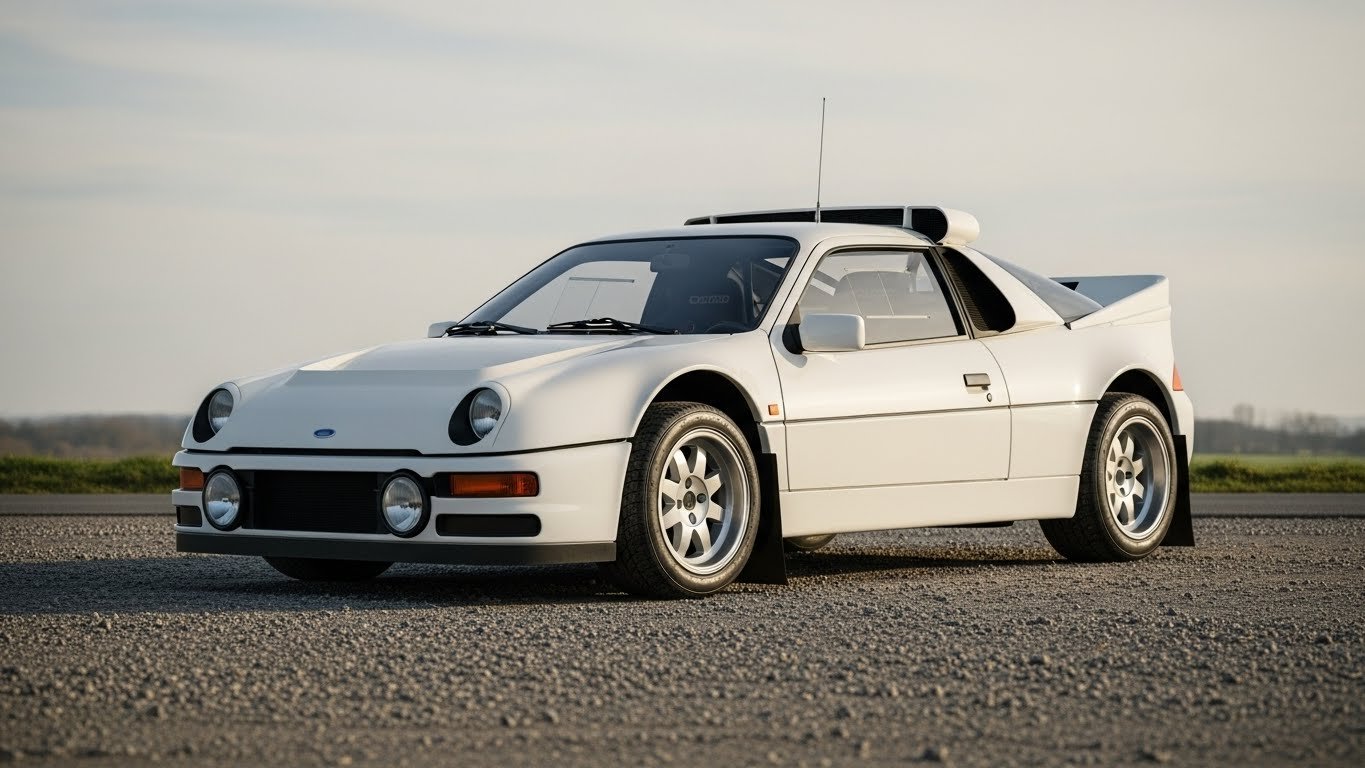
The Ford RS200 is one of the most iconic and explosive machines ever created for the legendary Group B rally era. Designed from the ground up as a pure competition car, it combined advanced engineering, extreme turbocharged power, and a lightweight mid-engine layout that pushed motorsport boundaries in the 1980s. Today, the RS200 stands as a rare and unforgettable symbol of innovation, speed, and the unrestrained spirit of rally history.
History: The Birth of a Rally Icon
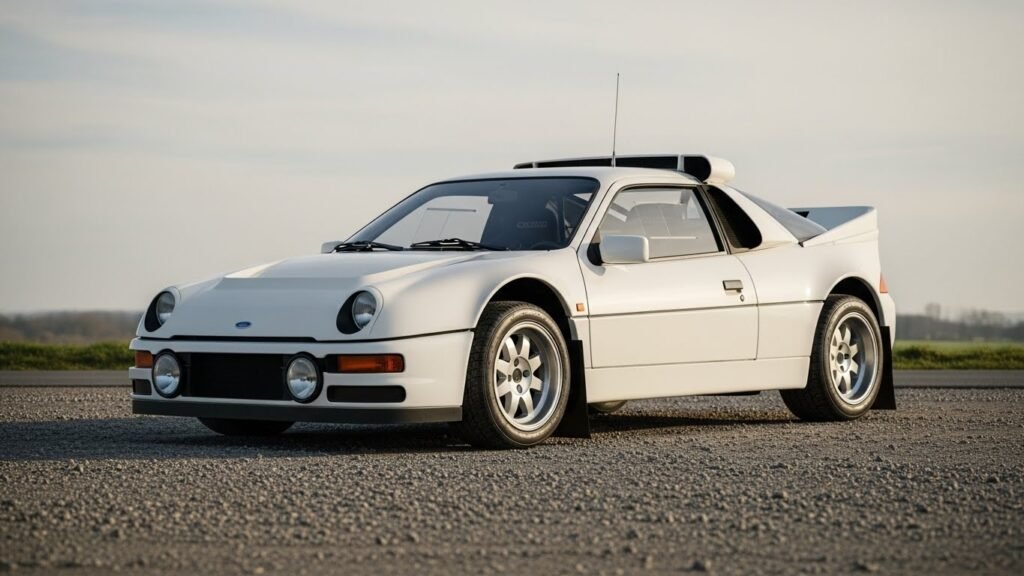
The Ford RS200 was born from one of the most intense and revolutionary periods in motorsport history: the era of Group B rallying. Introduced in the early 1980s, Group B encouraged teams to push engineering boundaries in ways that had never been seen before. Manufacturers were allowed to build lightweight experimental machines with extreme aerodynamics, turbocharged engines, and minimal restrictions. Ford, eager to return to dominance in international rallying, initially attempted to modify the Escort platform for competition, but the project proved fundamentally flawed. Rather than continue down a compromised path, Ford made the bold decision to design a new car completely from scratch—one engineered solely to win rallies at the highest level. This was the birth of the RS200, a project that brought together top engineers, designers, and aerodynamic specialists in an effort to create one of the most advanced rally cars ever conceived. The homologation rules for Group B required the production of at least 200 road-legal units, which meant Ford had to produce not just a racing prototype, but a fully functional road car with the same DNA as the rally machine.
The RS200 development team included notable talents like John Wheeler, a former Aston Martin and Formula 1 engineer, who led chassis engineering, while Ghia handled the exterior design. The result was a compact, mid-engine, all-wheel-drive platform with exceptional balance and flexibility for tuning. Once Ford unveiled the RS200 to the world, it became clear that this machine represented a completely different philosophy from earlier rally models—it wasn’t based on a road car, but instead a pure rally car lightly adapted for the street. Although the RS200 entered competition late and only raced briefly before Group B was banned for safety reasons, its reputation has continued to grow, fueled by rarity, innovation, and the mythology of an era when motorsport pushed the limits of what was possible.
Engine: A Compact Turbocharged Powerhouse
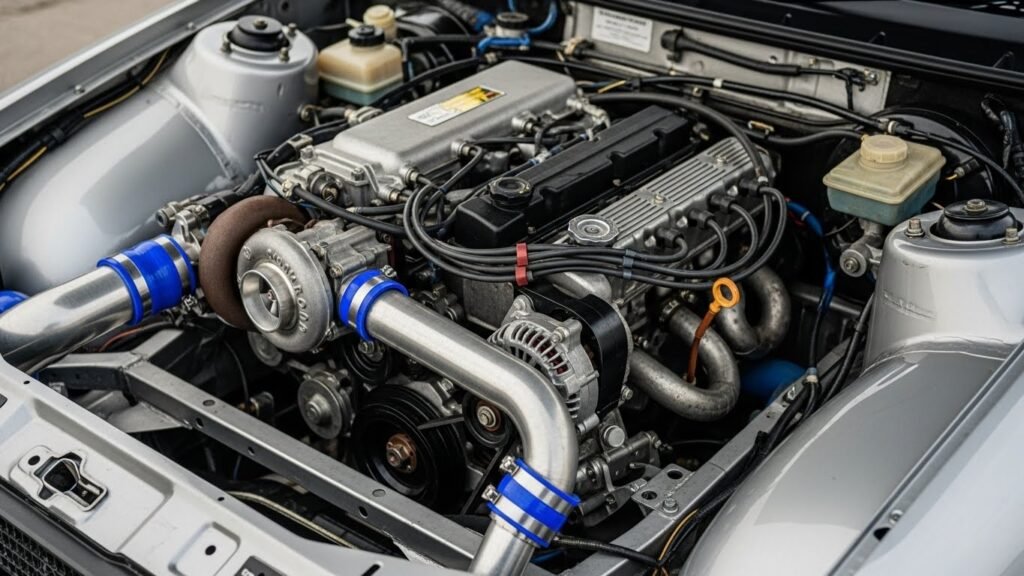
At the heart of the Ford RS200 lies one of the most memorable engines ever developed for rally racing. The standard version used a turbocharged 1.8-liter Cosworth four-cylinder engine, engineered for high boost pressures and incredible responsiveness. While the road-going RS200 produced around 250 to 300 horsepower, the racing variants were significantly more extreme. In rally trim, the RS200 generated between 420 and 450 horsepower, giving it an astonishing power-to-weight ratio. But the true monsters were the RS200 Evolution models, which used a larger 2.1-liter engine capable of delivering between 600 and 650 horsepower—and in some unofficial developmental configurations, the engine even approached 800 horsepower. This placed the RS200 among the most powerful rally cars ever built.
The engine’s position—mounted behind the driver but ahead of the rear axle—gave the car exceptional weight distribution. This mid-engine layout was unusual for rally cars of the time but provided unmatched balance and precise handling. The turbocharger delivered explosive thrust once boost kicked in, creating an extremely dramatic driving experience. The RS200 could accelerate from 0 to 60 mph in just over three seconds on loose surfaces, something unheard of in the mid-1980s. Even today, the numbers remain impressive, proving how advanced Ford’s engineering was during the Group B era. This engine was not merely a power unit—it was a statement of intent, built for one purpose: to dominate some of the harshest racing conditions ever seen.
Interior: Function Over Comfort, Built for Performance
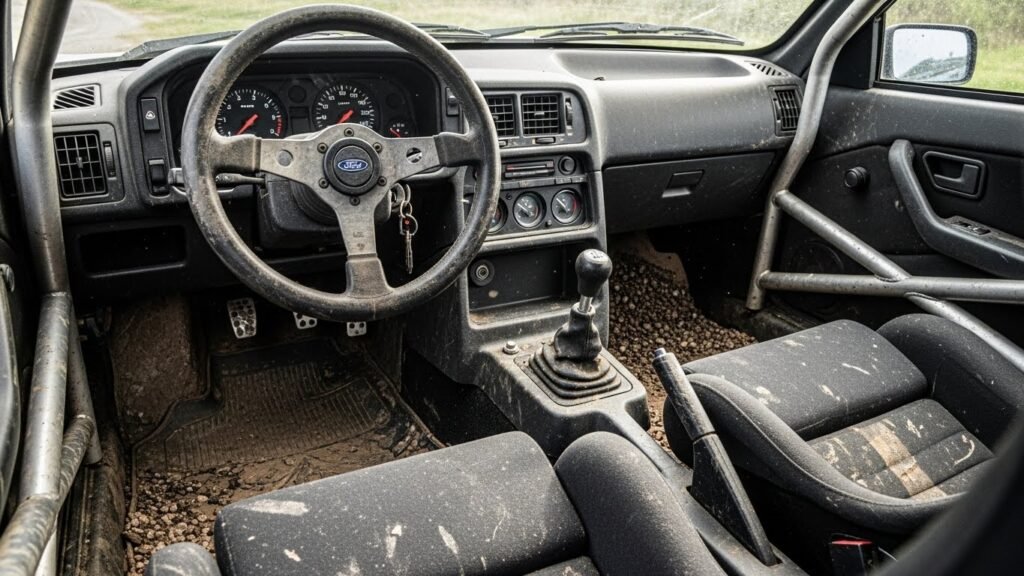
The interior of the Ford RS200 reflects its identity as a pure rally machine adapted for minimal road use rather than a traditional production sports car. Inside, the cabin was intentionally simple, focused on weight reduction and functionality. Instead of luxurious materials, you’ll find lightweight plastics, exposed screws, and a design philosophy centered on performance. The bucket seats were designed to keep the driver firmly in place during violent acceleration and uneven terrain, while the dashboard layout prioritized quick access to crucial information. Instrument gauges provided turbo pressure, engine temperature, and critical mechanical readings necessary for high-speed rally stages, making the cockpit feel more like a race car than a road-going vehicle.
Despite its spartan design, the RS200 interior carries a unique charm. Every element is purpose-built, reflecting the uncompromising engineering ethos that defined Group B. The mid-engine layout required a compact cabin, giving the interior a tight, driver-focused atmosphere. In the Evolution models, the interior became even more extreme, with additional bracing, enhanced safety equipment, and components prioritizing competition use. While modern sports cars often blend performance with comfort, the RS200 proudly makes no such attempt. It is raw, mechanical, and honest, remaining one of the most authentic motorsport interiors ever installed in a road-legal car.
Driving Experience: Brutal, Demanding, and Unlike Anything Else
Driving a Ford RS200—whether in road-spec or racing form—is an experience unlike any other. The combination of extreme turbo lag followed by a massive surge of boost creates a thrilling yet demanding power delivery. The all-wheel-drive system, designed with adjustability in mind, gives the RS200 immense traction on loose surfaces and remarkable stability at high speeds. Its long-travel suspension, engineered for the violent jumps and impacts of rally stages, absorbs terrain with surprising composure. Yet the car also requires significant skill to control; the explosive power curve means the RS200 can quickly overwhelm inexperienced drivers.
What makes the driving experience so unforgettable is how connected the driver feels to every mechanical component. The steering is sharp and communicative, the chassis responds instantly to input, and the sound of the turbocharged engine fills the cabin with an aggressive, mechanical character that modern cars often lack. Drivers often describe the RS200 as simultaneously exhilarating and intimidating—a machine that rewards precision and punishes mistakes, embodying the extreme nature of Group B competition
Legacy: A Rare and Revered Piece of Motorsport History
Although the Ford RS200’s competitive life was cut short after the FIA cancelled Group B in 1986, its legacy has only grown stronger. With only about 200 homologation cars produced—and a small number of Evolution models—the RS200 is extremely rare and highly coveted. Today, collectors view it not just as a valuable automobile but as a historical artifact representing one of the most dramatic chapters in motorsport. Auction prices regularly exceed hundreds of thousands of dollars, and Evolutions frequently surpass the million-dollar mark.
Beyond its rarity, the RS200’s engineering achievements continue to impress enthusiasts, journalists, and historians. Its combination of a mid-engine layout, advanced all-wheel-drive system, lightweight construction, and extreme turbocharged power placed it decades ahead of its time. The RS200 stands as a reminder of what manufacturers can create when freed from strict regulations—a true engineering masterpiece born from one of the wildest eras the automotive world has ever seen.
Conclusion: A Timeless Symbol of Group B Greatness
The Ford RS200 remains one of the most extraordinary and influential rally cars ever built. Its engineering reflects a period when motorsport innovation knew no boundaries, and its design captures the bold, fearless spirit of Group B. Although its competition career was short-lived, the RS200’s impact endures through its technical brilliance, iconic status, and unmatched raw driving character. Today, it serves as both a symbol of what motorsport used to be and a reminder of how far automotive engineering can go when ambition outweighs limitations. For enthusiasts, collectors, and historians, the Ford RS200 is not just a rally car—it is a legend that continues to captivate the world decades after its creation.